
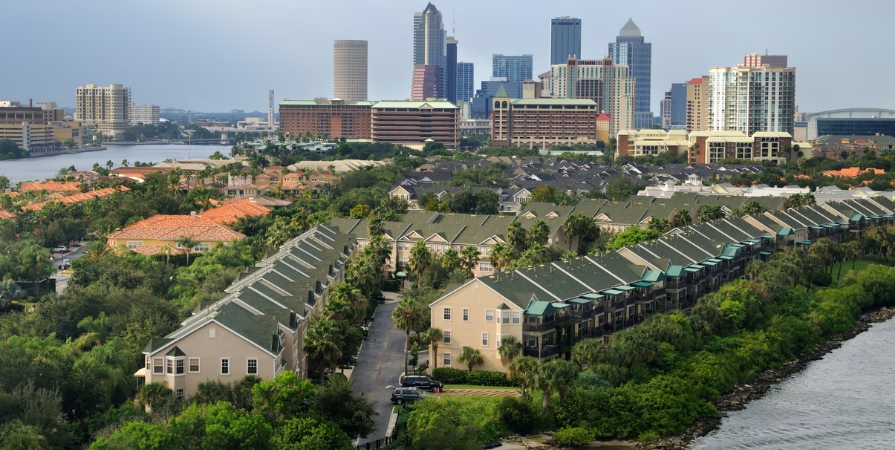
Across the United States, communities are facing a growing urban housing crisis marked by rising rents, limited availability, and record-low vacancy rates. The demand for affordable homes far outpaces supply, putting pressure on low- and middle-income households and forcing local governments to take urgent action. As housing costs rise faster than wages, many cities are launching innovative housing development initiatives and expanding government grants to make homes more accessible for working families, seniors, and vulnerable populations.
In 2025, urban planners, policymakers, and nonprofit organizations are collaborating more closely than ever to solve the housing shortage through a mix of zoning reforms, public-private partnerships, and financial incentives. The goal: build more units, faster—and ensure they remain affordable for decades to come. This article explores how cities are addressing the challenge and what strategies are proving most effective in expanding affordable housing supply nationwide.
Understanding the Urban Housing Crisis
The urban housing crisis stems from multiple overlapping issues: population growth, stagnant wage increases, restrictive zoning laws, and underinvestment in affordable developments. In many metropolitan regions, land scarcity and high construction costs further limit the ability to build new housing at affordable price points.
According to the National Low Income Housing Coalition, the U.S. faces a shortage of over seven million affordable rental homes for extremely low-income households. This deficit has ripple effects across the economy, increasing homelessness, workforce shortages, and cost-of-living disparities between cities and suburbs.
Solving this crisis requires a multi-pronged approach that combines policy innovation, targeted funding, and community engagement. Cities that balance density, affordability, and sustainability are emerging as national models for inclusive growth.
Root Causes of the Crisis
1. Supply Shortages: Limited new construction in urban centers where demand is highest.
2. High Land and Material Costs: Inflation and zoning restrictions drive up development prices.
3. Income Inequality: Wages have not kept pace with rising rents or property values.
Local Housing Development Initiatives
Many cities are accelerating housing development through zoning changes and streamlined approval processes. By reducing red tape, municipalities can shorten construction timelines and encourage developers to build affordable or mixed-income units.
For example, Minneapolis and Portland have eliminated single-family-only zoning, allowing duplexes and triplexes in traditionally exclusive neighborhoods. In California, new legislation encourages high-density construction near transit hubs to reduce commuting costs and improve access to jobs. These zoning reforms make it possible to add thousands of new affordable units without dramatically expanding city boundaries.
Some cities are also turning to modular and prefabricated construction to cut building costs and deliver new units faster. This approach allows affordable housing projects to be completed in months rather than years—critical in fast-growing markets.
Examples of Urban Housing Innovations
1. Inclusionary Zoning: Requires developers to allocate a percentage of new units as affordable housing.
2. Adaptive Reuse Projects: Converts vacant commercial buildings into affordable apartments.
3. Modular Construction: Prefabricated units that lower costs and accelerate development timelines.
The Role of Government Grants and Incentives
Federal, state, and local government grants remain central to funding affordable housing initiatives. Programs such as the Low-Income Housing Tax Credit (LIHTC), HOME Investment Partnerships Program, and Community Development Block Grants (CDBG) provide vital financial support for both developers and municipalities.
These grants reduce financial risk and make it easier for nonprofit organizations and private builders to develop affordable units. Many cities also offer property tax abatements or density bonuses to encourage developers to include affordable housing in their projects.
In addition to federal programs, state-level housing finance agencies administer grants and revolving loan funds to expand construction capacity and preserve existing affordable units. Some cities are even using public land for development at reduced costs to further lower project expenses.
Key Grant and Incentive Programs
1. LIHTC Program: Provides tax credits to developers who build or rehabilitate affordable rental housing.
2. CDBG and HOME Funds: Federal block grants supporting local affordable housing and community development.
3. Local Housing Trust Funds: City- or county-level funds that finance construction and preservation of affordable homes.
Public-Private Partnerships for Housing Solutions
One of the most promising strategies for combating the urban housing crisis is the rise of public-private partnerships (PPPs). These collaborations bring together government agencies, private investors, and nonprofit organizations to share resources and risk, making it possible to fund and manage large-scale projects more efficiently.
Developers often receive public subsidies or land discounts in exchange for committing to long-term affordability agreements. In return, cities gain access to much-needed housing inventory while ensuring that lower-income residents are not priced out of new developments.
PPPs also allow for innovative financing structures, including social impact bonds and community land trusts, which ensure long-term affordability by removing land from speculative markets.
Benefits of Public-Private Collaboration
1. Shared Financial Risk: Encourages investment in affordable projects that might otherwise be unprofitable.
2. Community-Focused Design: Ensures developments align with local needs and neighborhood goals.
3. Long-Term Affordability: Deed restrictions and land trusts protect housing from market inflation.
Preserving Existing Affordable Housing
While new construction is essential, preserving existing affordable housing stock is equally critical. Many cities are implementing policies that prevent the conversion or demolition of older affordable units, particularly in gentrifying neighborhoods.
Rehabilitation programs funded by government grants help property owners update aging buildings while maintaining affordable rent levels. Some cities, such as Washington, D.C., have launched tenant purchase programs, allowing residents to collectively buy and manage their buildings to protect affordability.
These preservation efforts extend the lifespan of affordable housing while preventing displacement of long-term residents—a growing concern in rapidly developing urban centers.
Preservation Strategies
1. Rehabilitation Grants: Offer funding for maintenance and modernization of older units.
2. Rent Stabilization Policies: Limit rent increases to protect tenants from displacement.
3. Tenant Purchase Programs: Empower residents to own and manage affordable properties collectively.
Challenges in Expanding Affordable Housing
Despite progress, major challenges remain. Limited funding, high construction costs, and local opposition—often referred to as “Not In My Backyard” (NIMBY) sentiment—can delay or block housing development projects. Additionally, supply chain disruptions and labor shortages continue to drive up construction timelines and budgets.
Policymakers must also balance density goals with infrastructure capacity. Expanding public transit, utilities, and schools to support new housing remains a significant hurdle for many cities. However, comprehensive planning that combines housing policy with transportation, climate, and workforce strategies can create lasting, equitable growth.
Common Barriers to Progress
1. Zoning and Permitting Delays: Lengthy approval processes increase development costs.
2. Community Opposition: Local resistance to higher-density projects slows housing creation.
3. Rising Construction Costs: Inflation and labor shortages reduce affordability margins.
Key Takeaway
The urban housing crisis is one of the most pressing challenges facing modern cities, but solutions are emerging through creative housing development strategies, robust government grants, and cross-sector partnerships. By streamlining regulations, leveraging public land, and investing in long-term affordability, cities can close the housing gap and build inclusive communities where everyone has a safe, stable place to call home. The path forward requires innovation, collaboration, and sustained commitment—but the progress being made today offers hope for a more equitable housing future.