
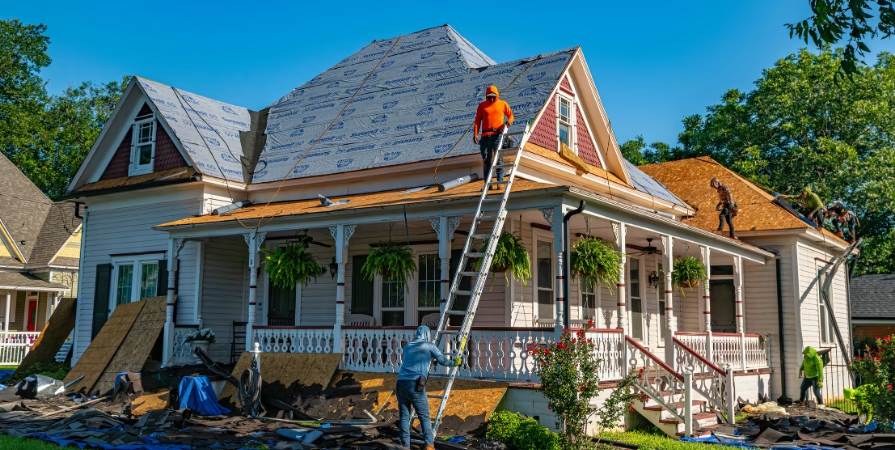
For disabled veterans, having a safe and accessible home is essential for independence and quality of life. In Oldsmar, Florida — a peaceful community in Pinellas County — many veterans face the challenge of modifying their homes to meet mobility and medical needs. Fortunately, several veteran housing grants and federal assistance programs are available to help cover the cost of accessibility upgrades, making it easier to live comfortably and independently.
This guide explains the top grants available for veterans in Oldsmar, including how the SAH program works, eligibility requirements, and local resources that can help streamline the application process.
Why Home Modifications Matter for Veterans
Many veterans experience service-connected disabilities that make daily tasks — like climbing stairs, using standard bathrooms, or entering their homes — more difficult. Accessibility modifications such as ramps, widened doorways, or roll-in showers can dramatically improve mobility, safety, and comfort.
However, these upgrades can be expensive. That’s where veteran housing grants come in. Administered through the U.S. Department of Veterans Affairs (VA), these programs provide financial support for eligible veterans to adapt or purchase homes that accommodate their physical needs.
1. Specially Adapted Housing (SAH) Grant
The SAH program is the VA’s largest and most comprehensive grant for home modification. It assists veterans with severe service-connected disabilities — such as the loss of limbs, blindness, or certain mobility impairments — to build, remodel, or purchase an adapted home.
Key Features of the SAH Program:
- Provides up to $117,014 (2025 limit) toward building or modifying a home to meet accessibility needs.
- Funds can be used to install ramps, widen doorways, modify bathrooms, or add adaptive technology.
- Veterans can use the grant up to six times throughout their lifetime, as long as total funds do not exceed the current cap.
- Eligible veterans must have a qualifying service-connected disability rating.
Example: A veteran in Oldsmar with limited mobility can use the SAH grant to install an accessible entrance, add grab bars and roll-under sinks, or remodel a bathroom to allow wheelchair access — all at little to no personal cost.
Eligibility for SAH:
To qualify, veterans must own (or plan to own) the home and have a permanent and total service-connected disability, such as:
- Loss or loss of use of both legs or arms.
- Severe burns or respiratory injuries.
- Blindness in both eyes (with only light perception).
Oldsmar residents can apply directly through the VA’s housing assistance portal or by visiting the nearest VA Regional Office in St. Petersburg.
2. Special Home Adaptation (SHA) Grant
The Special Home Adaptation (SHA) grant is another major VA-funded option for veterans who need moderate home modifications but don’t qualify for the full SAH benefit.
SHA Grant Highlights:
- Provides up to $23,444 (2025 limit) for home modifications.
- Can be used to adapt an existing home or a family member’s home where the veteran plans to live.
- Common upgrades include non-slip flooring, widened doorways, handrails, and smart home safety devices.
The SHA program is ideal for veterans with less severe service-connected disabilities who still require adaptive changes to improve safety and accessibility.
Eligibility for SHA:
- Veterans must have a qualifying permanent disability (such as the loss of or loss of use of both hands, certain respiratory conditions, or severe vision impairment).
- The home must be owned or occupied by the veteran or a close family member.
Tip: In Oldsmar, many veterans combine the SHA grant with local nonprofit assistance for added savings on renovation materials and labour.
3. Temporary Residence Adaptation (TRA) Grant
Some veterans temporarily live with family members while awaiting permanent housing or recovery from treatment. The Temporary Residence Adaptation (TRA) grant helps make those homes accessible during that time.
TRA Grant Overview:
- Available to veterans eligible for either SAH or SHA.
- Funds can be used for temporary modifications like ramps, handrails, or accessible bathrooms.
- 2025 limits: up to $47,130 for SAH-eligible veterans or $8,415 for SHA-eligible veterans.
For example, a veteran recovering in a family member’s Oldsmar home can use a TRA grant to install a wheelchair ramp or modify entryways — ensuring short-term accessibility without committing to permanent renovations.
4. Home Improvements and Structural Alterations (HISA) Grant
The HISA grant provides financial support for medical-related home improvements that enhance access or function, whether or not the veteran’s disability is service-connected.
HISA Program Details:
- Provides up to $6,800 for service-connected disabilities or $2,000 for non-service-connected conditions.
- Covers projects like bathroom accessibility remodels, lowered countertops, and improved plumbing or electrical systems for medical devices.
- Can be used alongside other VA grants, such as SAH or SHA, to expand overall funding.
To apply, veterans in Oldsmar can contact the VA Tampa Healthcare System, which serves the Pinellas County region, or consult with their assigned VA social worker for guidance.
5. Local and Nonprofit Support in Pinellas County
In addition to federal programs, several local organisations in the Tampa Bay and Oldsmar area provide additional assistance with home modifications for veterans.
Local Resources to Explore:
- Habitat for Humanity of Pinellas and West Pasco Counties: Offers accessibility remodels and home repair grants for low-income veterans.
- Rebuilding Together Tampa Bay: Provides free home repairs and safety improvements for veterans and seniors.
- Florida Department of Veterans’ Affairs (FDVA): Helps veterans connect with local resources and state-level assistance programs.
- Pinellas County Veteran Services: Offers help with benefit applications and guidance on navigating housing grants.
Pro Tip: Combining local nonprofit programs with federal veteran housing grants can maximise your available funding and speed up project completion.
How to Apply for VA Housing Grants
Applying for the SAH program or other VA grants is straightforward, but attention to detail is essential. Missing documentation can delay the approval process.
Steps to Apply:
- Obtain a VA Certificate of Eligibility (COE) confirming your disability status.
- Complete VA Form 26-4555 (Application in Acquiring Specially Adapted Housing or Special Home Adaptation Grant).
- Submit your form online through eBenefits or mail it to your nearest VA Regional Loan Center.
- Work with a VA representative or local housing consultant to assess your property and modification needs.
Once approved, you can work directly with contractors or programs to begin your home accessibility project.
Common Accessibility Upgrades Covered by VA Grants
VA housing assistance funds can be used for a variety of projects designed to improve safety and independence. Typical upgrades include:
- Wheelchair ramps and lifts.
- Roll-in or walk-in showers with handrails.
- Automatic door openers and widened hallways.
- Lowered countertops and sinks.
- Accessible flooring and lighting improvements.
- Home automation systems for mobility-impaired veterans.
These upgrades allow veterans to remain independent and comfortable in their homes — whether they are building a new adapted home or improving an existing property in Oldsmar.
Key Takeaway
Disabled veterans in Oldsmar, Florida, have access to a wide range of veteran housing grants designed to make their homes safer, more functional, and better suited for accessibility upgrades. The SAH program remains the most comprehensive option, but other grants — like SHA, TRA, and HISA — provide flexible support depending on your specific needs and living situation.
By combining federal programs with local nonprofit resources, veterans can achieve affordable and meaningful home modifications that improve quality of life and promote independence for years to come.